Saturday, November 21, 2009

How Social Computing enters the enterprise?


As I've embarked in an interesting journey about creating a social networking set of tools and community site for my company, I tend to look more closely on how others did it and the dos and don't on the topic.

Here is an interesting quick summary of the considered two ways social computing are adopted in the enterprise, according to Dion Hinchcliffe: Top-down and bottom-up. No rocket science here, but it's interesting to see first that both ways are recommended and not exclusive as well as what drives and supports each way.


Here is an "encouraging" note to those of you in a hurry ;-) from Social Computing Journal :

"Based on their findings, the Nielsen Norman Group estimates a timeline of approximately three to five years for most organizations to successfully adopt and integrate social technologies into their intranets. They also suggest that the political and cultural changes needed for its useful and widespread use may take longer"


Have fun! I'll keep you posted on how it goes for us.

Tuesday, August 25, 2009

Online Ads more effective than TV for offline CPG Sales growth and brand building: +9%

A recent study published by ComScore and its research partner dunnhumbyUSA, shows that consistent online advertising can actually lift retail sales in the CPG industry by 9% over a 3 months period and contribute more to brand building than TV ads (+8% over a 12 months period according to an Information Resources, Inc. report.).

"These early results confirm the ability of online advertising to successfully build retail sales of [consumer packaged goods] brands on par with the impact of television advertising. It is likely that the more precise targeting ability of the Internet – especially in terms of accurately reaching the desired demographic segment – is a key reason for its effectiveness. That is meaningful in and of itself, but when you take into account the fact that online advertising is generally less costly than television, these results take on even greater significance," said Gian Fulgoni, Executive Chairman of comScore

Let me know how does your marketing-mix looks for the remaining part of 2009, you may bend it to more of the web?


Saturday, August 22, 2009

Social Networking Users Demand for a Single Place for their Digital Identity


Good Material to support our Marketing Plans. This Universal McCann research is conducted every year and this is the 4th Wave. Social Media is taking the web planet by storm but now is the time where it seems active internet users - those accessing at least every other day - are looking for the "one place" for their digital identity rather than spreading around various specialized social sites.

Just a few numbers to give you a clue:
  1. 62.5% of active internet users (16-54 years old) have created a social profile in 2009,
  2. 71,1% have visited a friend's home page.
  3. 81.5% of Social Networking Users did message friends,
  4. 76.3% uploaded photos,
  5. 74.3% found old friends
  6. 56.4% found new friends
  7. 47.9% joined a group
We should provide these influencing people ways to populate their unique digital profile with ways to engage and maintain dialog with our brands in different form factors. Video is still the #1 form factor, but "instant UGM news" is ramping up as twitter's success attests and Facebook acquiring FriendFeed - that I started to use recently - reinforces as well.

Thursday, June 04, 2009

Larry Ellison and Scott McNealy at Java One video


What a pleasure to see these two great leaders on stage again. How could one imagine Scott would love to go on stage with Sam Palmisano ;-)

Many have been asking me about the underlying strategy of Sun's acquisition by Oracle, Scott gives it a clue: free advertising for winning the America's cup and cutting travel expenses on Java One Japan by doing it in Larry's garden.

We do not know what's next, but what is appearing more clearly is that the Oracle/Sun combination is bound to become another IT giant that can compete head to head with HP and IBM. As Scott would typically say: go kick some butts gang!

Good luck to them, it's going to be a lot of fun to watch.

Sunday, May 31, 2009

Enterprise 2.0 is coming: 30% of executives see social networking belonging to their business strategy


A recent research from Deloitte - see chart - gives us a clear signal that Enterprise 2.0 is making progress in our 2009 corporate world. As expected, this social transformation is coming from the people getting self-organized rather than from the top, as anticipated in the very good book Here Comes Everybody: The Power of Organizing Without Organizations.

As a matter of fact, 55% executives reveal that their company do not have an official policy for social networks. They'd better have one because it's easy to damage a company's reputation on social media as nearly 75% employees agrees.

There is also a risk for employees to expose their profile on social media as it can impact their reputation in their job context in a negative way. We need to address these privacy issues over time, but for now just beware to separate what your "friends" see from what the world can see.

Saturday, January 24, 2009

B2B Marketers’ Priorities and Pain Points for 2009


According to Marketing Sherpa new research, the previous one was conducted in Feb 2008, B2B marketers will focus on:
  1. Dealing with lengthening sales cycles
  2. Doing more with less
  3. Web 2.0 and social media marketing
  4. Focusing on lower-cost, high-impact lead gen tactics
I will obviously only highlight the point 2. which wouldn't have been on the list a few month ago. I remember being looked at as a strange animal when pitching about Marketing 2.0 back in 2007. I heard many things as "this is just a fad", "you're always trying to bring up something new", "Our customers are not 15 years old", etc.

In the marketing area, social media and Web 2.0 importance is raising under this economic downturn period we're in, more rapidly I anticipate than if the business was going to grow. I'm expecting Cloud Computing and new software subscription business models to come up more rapidly in the IT space for the exact same reason. The economic downturn is an incredible opportunity to reconsider what we've been doing so far, to challenge deeply our fundamentals, to stress decisions that were not that urgent otherwise. A good thing in my views though of course I suffer just as everyone out there of this downturn (mood downturn as well by the way).

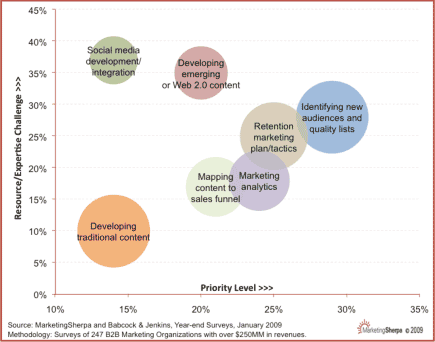
The research points out that many marketers still find Web 2.0 usage within their marketing campaigns arsenal a challenge. First and foremost because Web 2.0 is still new for a lot of them. They're not digital natives and tend to relate to the activities they're comfortable with (Webinars, White papers, etc.). Their top challenges, according to the research are:
  1. Social media development/integration
  2. Developing emerging Web 2.0 content, such as videos, blogs and podcasts
My take would be for you, already a blog reader ;-), to start your day in the office tomorrow by deciding to integrate in one of your planned campaigns a Marketing 2.0 technique. Try to pick the one that is intuitively the most relevant to your audience (start a blog or a podcast, foster a community or integrate an existing one, turn a major topic of interest into a wiki for and by your customers, start a twitter micro-blog for one of your offer) and do not forget about including video material as we discussed earlier this month.

I would also support this recommendation from Marketing Sherpa:
“Mapping content to the sales funnel “ is an immensely important aspect of success in lead nurturing for the complex sale. It deserves to be among the top priorities because some of the others – Web 2.0, social media and traditional content – are at their most effective when mapped to the sales cycle.
Marketing 2.0 will make it big in 2009.

Saturday, January 10, 2009

Video is even more Web 2.0 mainstream in 2009


According to Comscore, 77% of the US Internet audience viewed video online in November 2008 for a total of 12.7B videos viewed, growing 34% compared to 2007. Do you really consider your 2009 campaigns without it?
So, some numbers for you:
  • YouTube is is still on Top, representing 98% of all videos viewed on Google's sites.
  • The average online video viewer watched 273 minutes of video.
  • 97 million viewers watched 5.1 billion videos on YouTube.com (52.3 videos per viewer).
  • 52.5 million viewers watched 371 million videos on MySpace.com (7.1 videos per viewer).
  • The duration of the average online video was 3.1 minutes.
  • The duration of the average online video viewed at Hulu was 11.9 minutes, higher than any other video property in the top ten.
Web 2.0 is video intensive.

Friday, January 02, 2009

Happy New 2009 Year


I strongly believe that 2009 will be the opportunity for everyone to revisit everything they've been doing so far. Our values are changing, rules must follow thus giving birth to a better world.I wish you a very happy 2009 new year looking at the stars with a smile on your face.
Posted by Picasa

Tuesday, December 30, 2008

For the first time: the Web, 2nd to TV, surpasses all other media as News Source


I know most of you could perceive it naturally or because you're very much web centric (is this a sign of youth ;-), but I found it interesting to see it confirmed by research: the web is now the preferred source of information - whether national or international - for 40% of the researched compared to 24% in September 2007. Wow! That's a big wave in my opinion, a tipping point I should say. The noticeable progress is against Newspapers as you can see in the above diagram.

And for young people, 30 years old or less, the web rivals TV with a serious jump in 2008 - see the diagram below - indicating that TV is next to be surpassed in the coming years.

This is only good news for the Web 2.0 movement, it reinforces the importance of our web presence as individuals and as members of multiple communities.

Wednesday, December 24, 2008

Holiday season sales online down just 1% despite 5 days shopping missing vs 2007

According to ComScore, this online holiday season is impacted by 5 fewer shopping days this year compared to last year. The impact seems to be contained to 1% decrease. The increased average online spending per day between Thanksgiving and Christmas ($643M, up 5% from last year) does not compensated for 16% decreased number of shopping days for this period.
The e-commerce spending for the first 49 days - Nov through December 19 is totaling $24.03 billion. The top categories are Sport & Fitness (+31%), Books & Magazines (+18%), Video Games, Consoles & Accessories (+17%), Apparel & Accessories (15%), Flowers, Greetings & Gifts (+13%) while Music, Movies & Videos are down (-24%).

Friday, December 12, 2008

2009 IT Trends: can community based IT services on the cloud help?


As 2009 sets itself to unfold, major IT trends are starting to shape our future.
In a nutshell we should be watching:
It's going to be tough and only those who can go beyond their fears and control it will be able to seize opportunities in front of us. Yes IT will be impacted, but what is a better time to make the tough decisions you've been reluctant to make?
I found it very interesting that in this context the eTask.it initiative, referred to by a friend of mine part of the management team there. In a nutshell, they describe themselves as "the first IT collaborative system" addressing IT staffing via community enabled sourcing.
Cloud Computing can also deliver Service as a Service, kind of funny, or maybe more appropriately Service on the Cloud as an important part of the Cloud Computing trend.
Good luck to them. More than yesterday, lesser than tomorrow, bet on the Web 2.0 for your future.

Tuesday, October 07, 2008

Do you see the elephant?


You know I usually never discuss matters directly relating to the company I work for, but today I need to make an exception.
I was fortunate enough to participate to the public launch of Sage ERP X3 in Germany. Kudos to the team! Big milestone in our expansion, well prepared, executed with fun.
So here is why the exception: the German team decided to produce a funny video and I could not help but to share it with you.

Have fun! Share it, ERP marketing can be fun as well ;-)

I'm sure Christopher on the team would be happy to discuss about typical marketing 2.0 tactics.

Friday, October 03, 2008

What are the key forces driving to Enterprise 2.0 transformation?


Tectonic forces displacing enterprise applications boundaries are very diverse, I don’t pretend to be exhaustive here, but I’d like to highlight the ones having in my opinion a significant impact:

  • Ubiquitous good quality (bandwidth) web access – check broadband stats – encouraging employees mobility
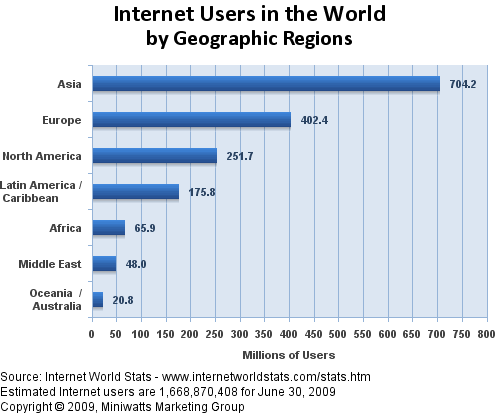
  • Web crazy expansion (5.5M new users per week, 1.3B Internet users in Dec 2007) and more specifically mobile web expansion (3.2B mobile devices and among them 1.2B with a modern web browsing user experience) and explosive e-commerce growth - check IDC stats : 50% internet users will buy on line this year – favouring extended enterprise process development
  • Users are educated at home on web based applications, noticeably on web 2.0 applications (Social Networking, Blogs, Wikis, …) and are increasingly accepting the Cloud Computing model relevance by using it (personal e-mail, Instant messaging, social bookmarking, photo & video sharing, e-banking, ….) – preparing for webtop and web 2.0 introduction in the enterprise (check "moving from deskltop to webtop" post)
  • SOA and Mashup emergence as a distributed application architecture
  • Transactional processes automation maturity – very typical of the ERP supported ones – will privilege productivity gains and transaction costs reduction (referring to  Ronald Coase « The law of the firm ») in automating collaborative processes and exception management, paving the way to ERP/Web 2.0 integration

This nice cocktail augmented with a solid number of “ Y Generation ” employees -- born between 1982 and 1994 - having grown with the natural use of SMS, instant messaging and social networking on the Web and which will be enterprise leaders in the next ten years - prepares the company with its change towards Enterprise 2.0 (first defined by Andy McAfee) characterized by the use of the Web 2.0 collaborative applications within the enterprise to harness collective intelligence. 


Saturday, June 28, 2008

Mobile Web 2.0 revenues to reach $22.4B in 2013


Fellow Marketers, I know I've been busy like crazy since a while but let's believe that I'll be back here with more regularity.
I've been tracking Internet users growth since Scott McNealy, in one of his colorful keynote, reminded all of us that the Internet was still growing fast. Most of us in the western world do believe that Internet is a given but it's growing still fast - 5M new users per week - and growing mobile especially in Asia.


For us, marketers and software vendors, it must remain on our radar chart when we plan our campaigns and product roadmaps, especially when social networking is front stage. Why? Because more users on the net means more value for the network thus for the Internet, this is Bob Metcalfe law. It means more reach for any community every day.

If this is accurate, then Web 2.0 is going to bring a lot of revenue on the table, not only VC's, and Mobile Web 2.0 should as well. Juniper Research issued in May 2008 an interesting white paper stating that "Mobile Web 2.0 revenues to reach $22.4bn by 2013 driven by User Generated Content and Social Networking." Point taken and much appreciated.

Get ready for it. Web 2.0 burst year one i.e. 2007 was all about user generated content. Year 2 i.e. 2008 will be all about social networking and your multiple social networking identities management. More on this later, but you can double check Web 2.0 2008 conference keynotes that I did attend in San Francisco last April.

Saturday, March 15, 2008

Music, Video and Software business models paradigm shift underway


When did you last buy a CD? I didn't buy one for a pretty long time and the last one I bought was from an artist I like nearly every single piece of work he creates, Pat Metheny. Is then the music business going away for a free show? Of course not, because one buys legally music on-line. Do we really?

NPD Group, a market research firm, gave us some clues recently in publishing a new report about the music industry. Here are in shorts the finding for 2007:
  1. 48% of all teenagers never bought a CD (38% in 2006)
  2. CD sold in the U.S. fell 19% from 2006
  3. Apple iTunes (selling only digital downloads) is now the #2 music shop in the U.S. jumping ahead Best Buy and trailing Wal-Mart
  4. 29 Million people bought music legally from online music stores, up from 24 Million in 2006 i.e. + 21%
I'm convinced buying singles or albums on-line is not the ultimate business model. What about subscribing for a monthly fee of about $20 to listen to all the music you can get legally? Store it on your MP3 device when you're not connected for as long as you pay for your subscription?

You like this idea? All the music you can get for a flat fee? What about Video
And what about for FREE?

Well checkout hulu.com, all the video you can get on-line for free, because you get advertising with it. Unfortunately only in the U.S. for now.

... and what about software? What about a flat monthly fee to access a dedicated application portfolio coming out from several vendors, a bouquet of SaaS focusing on a business or personal matter (Sales, Marketing, ...).

Let's watch this e-commerce space carefully as music and videos are paving the way when it gets down to digital goods business models tsunamis.

Saturday, March 01, 2008

Where is Internet headed?


It's been a long time since I published a post. Very busy working in my new company to revamp the product portfolio and its marketing. It's a B2B software company and the question of course was: "what to have on our radar to think about the future releases of our applications".

My nickname in this new company is Emmanuel 2.0, you wonder why? That's because you're a newcomer to this blog. So here we are, trying to figure out the major Internet trends. I've always been fond of supporting my hunches with data. So let's deal with the claims first and the figures to follow.
Claim#1: The Internet is growing still very fast (5M new users per week) thus making e-commerce king
Claim#2: The Internet is growing mobile (2.8B mobile phones in 2007 growing to 3.8B in 2011 to be compared with 980M PCs in 2007 growing to 1.5B according to Gartner). "Worldwide sales of mobile phones to end-users surpassed 1,15bn units in 2007, a 16% increase from 2006 sales", Computing SA citing Gartner. And if you're wondering what is the major customer benefit iPhones brings (4M units sold in 2 quarters), here is my take: real and easy web browsing. I can at least speak for myself, I do not fire up my PC at home to navigate on the web and checkout my facebook page, I use my iPhone.
Claim#3: Web 2.0 is driving the webtop metaphor vs the desktop metaphor (check my post "from desktop to webtop" about it)

Now with the additional figure about e-commerce: "eMarketer predicts that online retailers in the US will ring up over $100 billion more in sales in 2012 than they did in 2007. Sales growth will come mainly from consumers who are shifting their spending from traditional retail stores to the Internet.", eMarketer. Take a look at the table for more details, but you can easily figure out that buying behavior and for that matter marketing web behavior are shifting big time. I would strongly advise to revise your marketing mix to accommodate at least 20-25% to web marketing including viral marketing techniques.

Finally, and I'm sure we'll agree easily, web content has also shifted to video and pictures. For this one, I'll let you find the figures. Let's rock marketing on the web for 2008 fellow marketeers.

Saturday, November 03, 2007

Software on tap: SaaS and ASP are really not the same


I launched MS Word today, it's 24 years old! Don't you have enough? Don't you think time has come for a new software paradigm. Do you like Word? What do you do in e-mail then? This industry has come to a conclusion that software could very well migrate to it's editor servers. It started with hosting, then ASP, and now SaaS (also called on demand applications) is coming around.
Conventional wisdom has coined it at the same thing but it's not. But an ASP delivers your monolithic application at distance, that's all it does. Those who believe ASP and SaaS are the same thing have just missed the Web 2.0 paradigm shift where the web has become an application platform. In fact "application" is not a proper term, where as "application services" better describes what is happening. You probably know Facebook by now. If you don't go ahead and build your friend community there. As I recently stated, one of the major success factor of facebook lies in its application platform strategy. The beauty of it is that users are defining a unique user interface to THEIR facebook by adding application to their home page. Customization, as we know it, is king. Gone the days when software vendors would define frozen user interfaces e.g. MS Word.
But this new way of combining small applications, or widgets, into a dedicated user customized portal has reached the enterprise. Yes! Enterprise mashups are coming up. Do you know Longjump? You don't, then just go there for a test drive. It speaks for itself far better than a long post of mine.
This is the destination: mixable enterprise widgets or applets on tap. You pay as you drink it. Software is a service, isn't it?
Bye bye MS Word and all the monolithic applications, whether on your PC, your servers or with your ASP. Time has come for SaaS to thrive.

Sunday, October 21, 2007

Technology's 10 Most Mortifying Moments


Just for fun, I could not resist but to share with you this article on Computer World Technology's 10 Most Mortifying Moments. You probably remember all of them, but even if you do you'll have a great laugh.
Let's just end the week like this. We'll be back on more serious topics next week like what is the difference between ASP and SaaS?
My favorite is still Ballmer dancing on stage. I wish I could be there to see people

Sunday, October 07, 2007

Social Networking: the facebook mashup effect


I'm a recent facebook user. I knew about facebook for quite a while but I thought, as probably most of you, that it was a youngster phenomena. I'm no longer a youngster if anyone in doubt out there ;-) . This comes as no surprise as Facebook was created in 2004 by Mark Zuckerberg, Harvard graduate, and restricted at first to Harvard College students, then to other Boston area schools. More details on Facebook history here. On May 24, 2007, Facebook launched an API that allows the development of applications to be used on the site, known as Facebook Platform. A defining moment that illustrated one more time this web 2.0 postulate that the web is now an application platform.

When inviting some of my friends to facebook, I sometime needs to explain to the most reluctant among them why this social network site is THE one. I think this ability to mashup tens if not hundreds of cool applications to leverage your friends network is sticky. It gives your facebook a constantly evolving face, a user interface typically webtop where users do refine it as they use it -- see We're moving from Desktop to Webtop. The real-time informations about your friends (mood, networks, events, ...) gives it another reason for it to be addictive. Some of them even joined a group called "I facebook too much" demonstrating the addiction.

As you can see in the Alexa graph, Facebook is on its way in 2007 to surpass the MySpace phenomena. More than the success of social networking as one of the Web 2.0 killing applications, I see it as a clear indication that mashups and webtop will prevail in the future. Fellow software vendors, take it as a home run. Enterprise 2.0 software should take this into account as well, as it will not remain a consumer phenomena. Large corporations do need social networking. In the coming months, we should see tremendous repositioning around this and some of the software vendors could just enter obsolescence allowing for a new software leaders generation. Beware!